
Burning Village
India
Black diamonds are the very reason they live in a blazing village.
China and India, in particular, continue to rely heavily on coal, sustaining global demand. China is by far the world’s largest consumer, and India continues to expand both its production and use.
But behind this global picture lies another reality the lives of the people who work where coal is mined. In many mining regions, there are few other industries and even fewer opportunities. With limited choices, many residents depend on large coal companies for their livelihoods. Some head into dangerous worksites simply to support their families.
Dhanbad, in the eastern Indian state of Jharkhand, is one of the places that embodies this complex landscape. Open-pit and underground mines support the local economy, yet the air is thick with dust, the ground slowly sinks, and underground fires burn for centuries without being extinguished. Heat and toxic smoke seep from spontaneously ignited coal seams, quietly harming the health of nearby communities.
If the coal industry were to vanish overnight, so would the fragile means of survival for many families. This is why so many continue to work in hazardous conditions, despite knowing the risks.
Around the mines are also those who are not formally employed—people who break apart leftover coal by hand and collect scattered pieces to sell. Their daily income shifts with coal prices and government policies, leaving them even more vulnerable.
The story of coal is not only about its impact on the global environment. It is equally about the people whose everyday lives are shaped—and often limited—by the presence of coal beneath their feet.
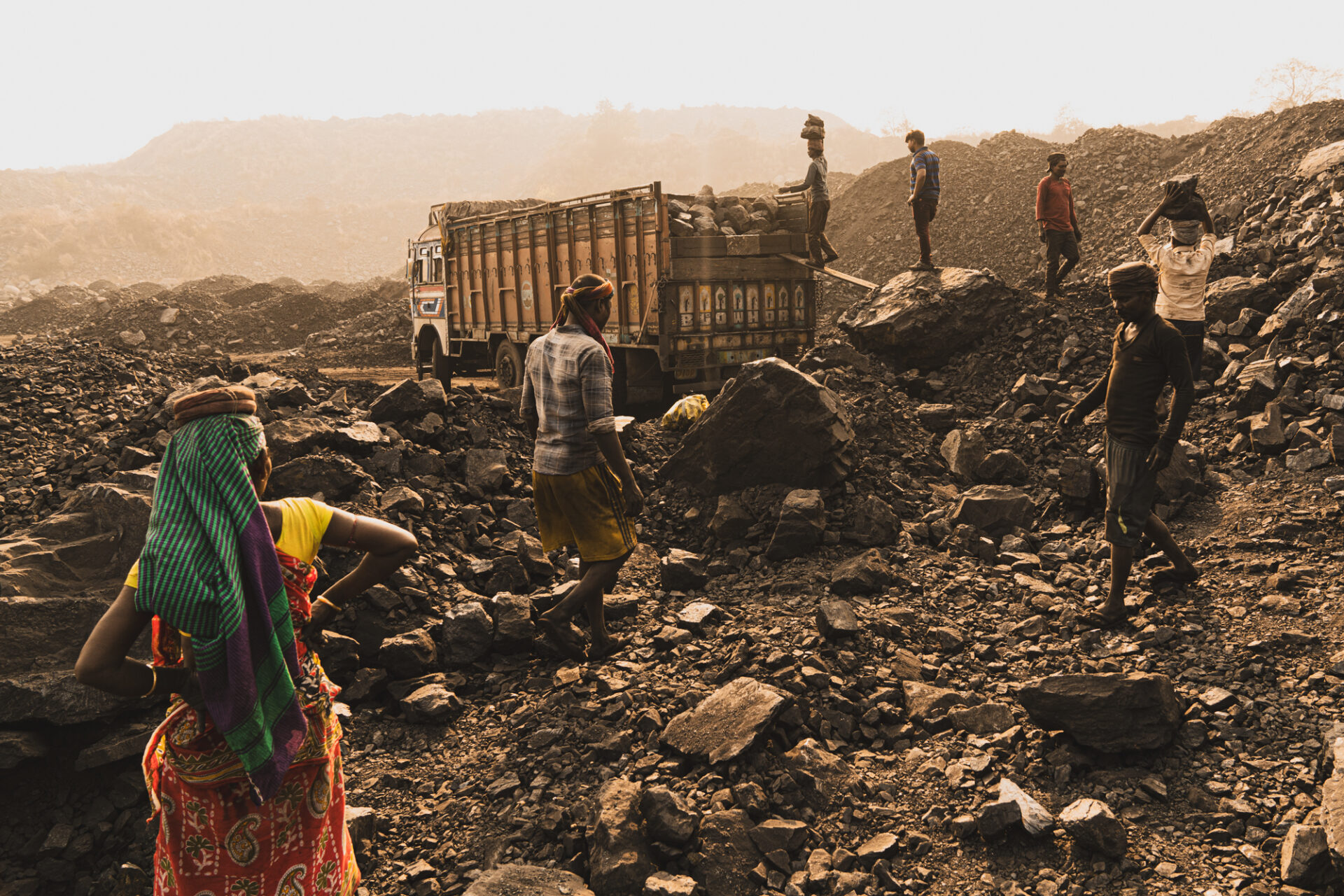
They are lining up to load coal onto the trucks being employed by the company, their income is comparatively stable.
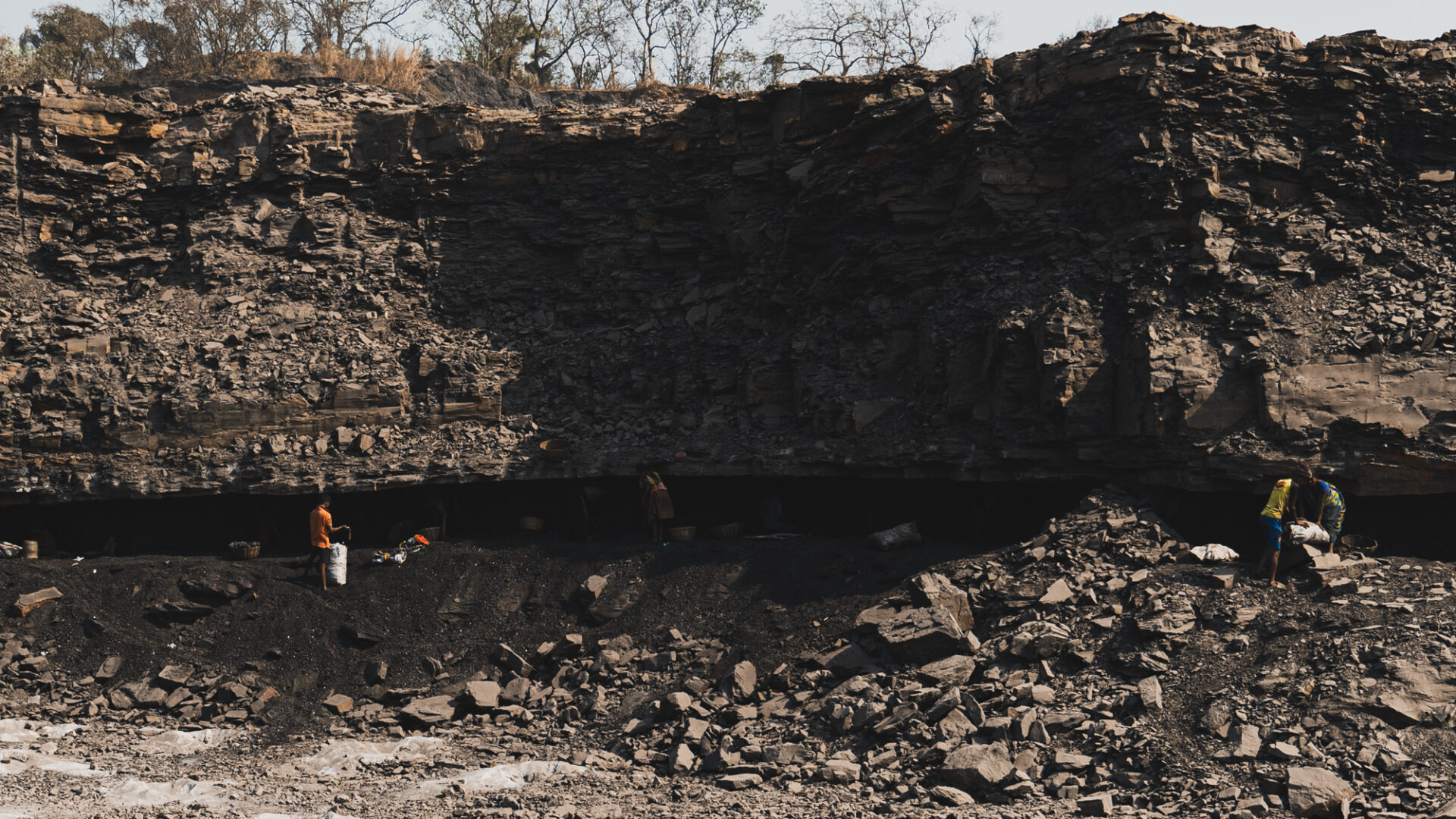
After large company machinery completes its open-pit mining, local residents gather at the resulting exposed coal seams to dig further and collect the remaining coal.
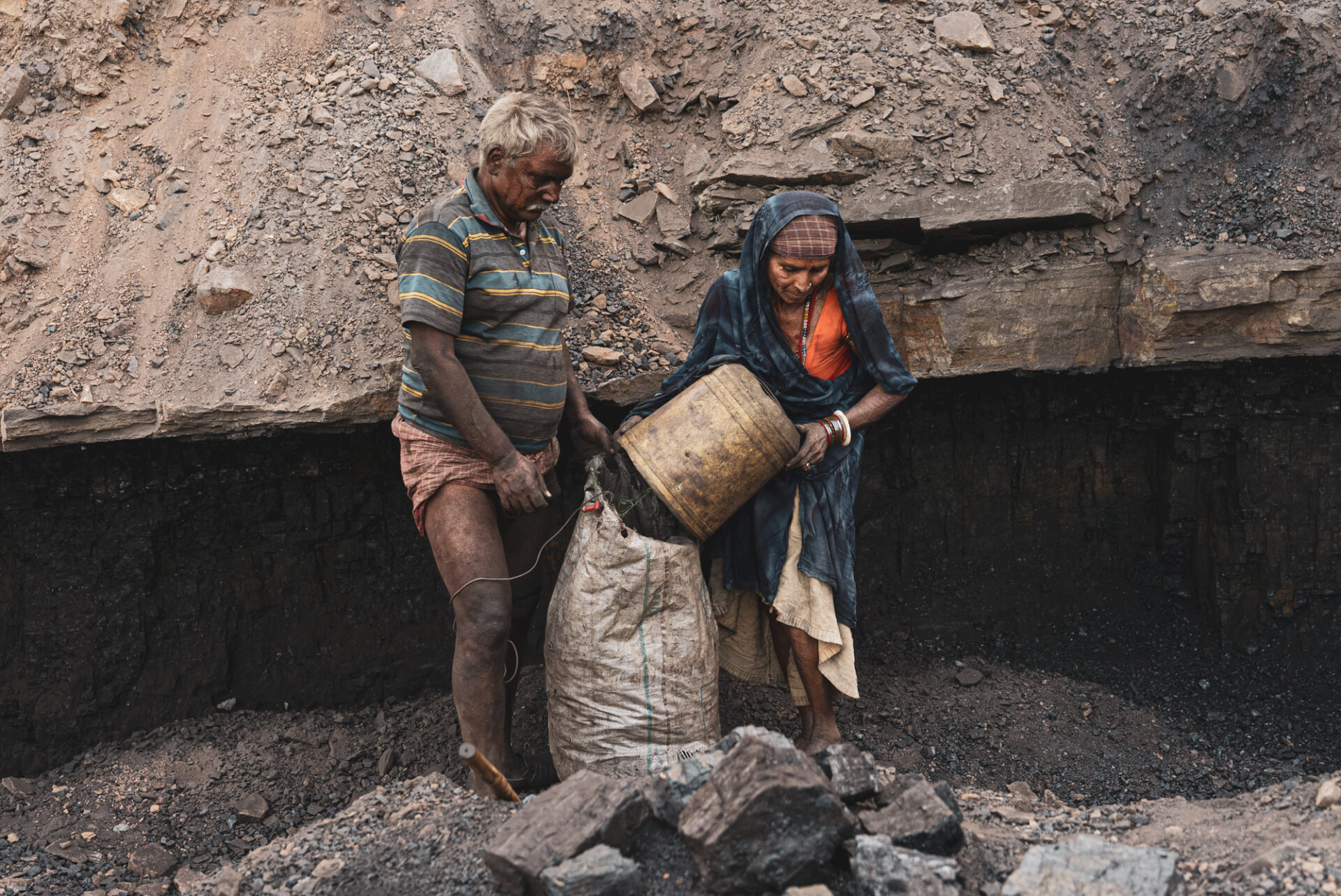
The couple starts extracting coal early in the morning to avoid the intense heat of the day.
This is part of the daily routine they have been accustomed to for decades.
The husband, they say, suffers from a bad back, and the wife appears to be about the same age as my mother.
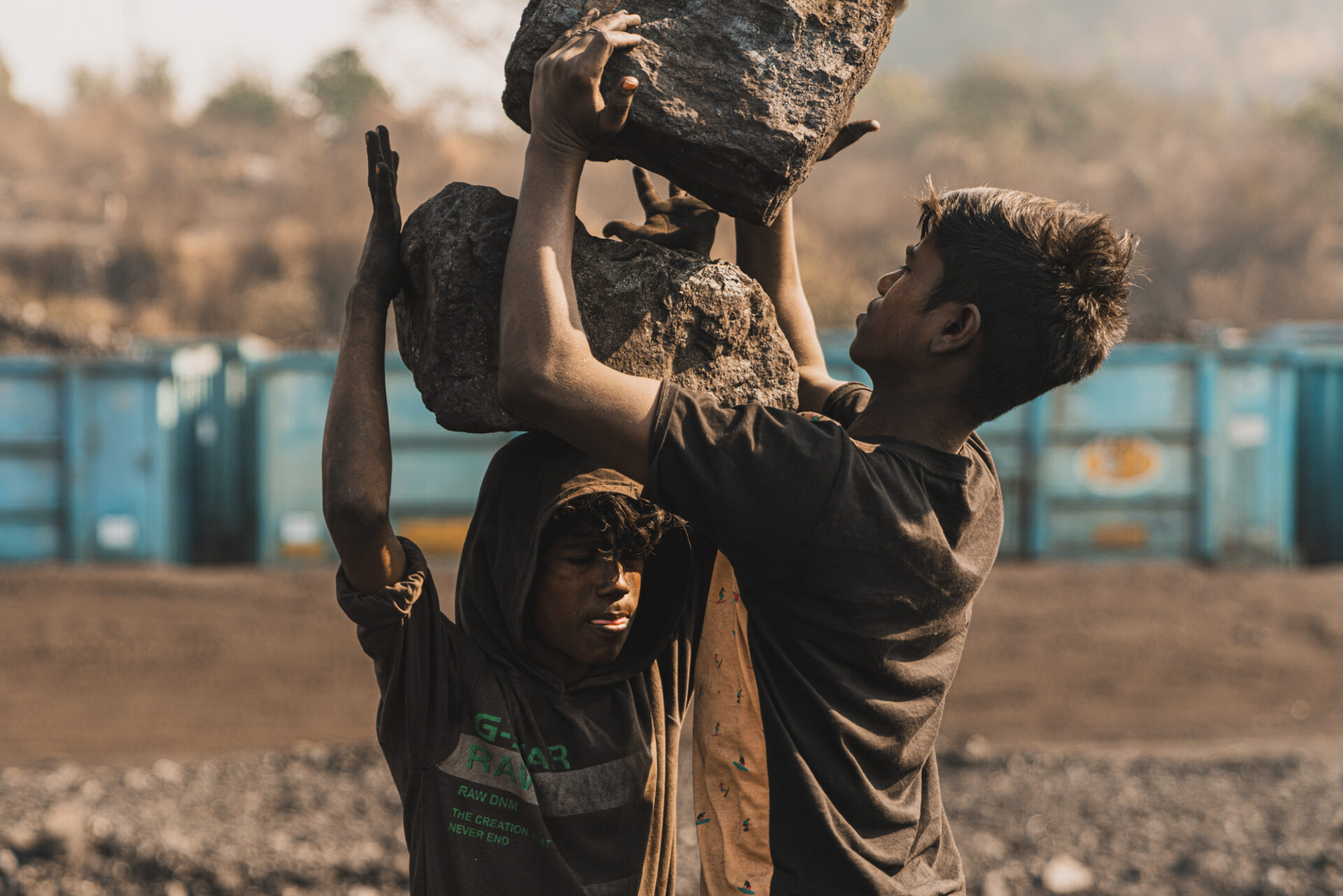
The boy spends his mornings at school, and his afternoons assisting his parents with coal extraction.

Large chunks of coal don’t burn well, so they are broken down with a hammer into pieces of suitable size.
Even children play a significant role in supporting the family’s income.
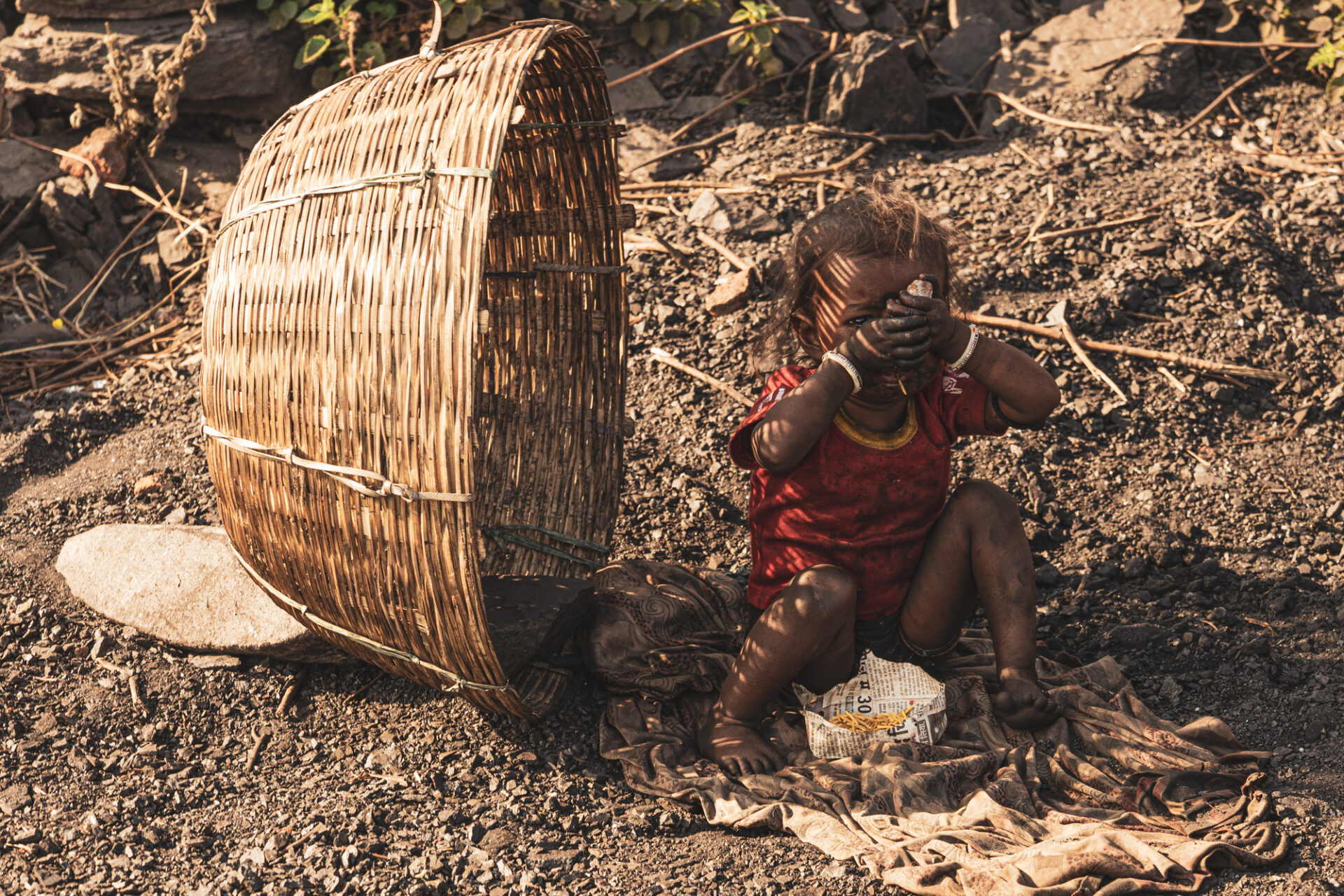
In the coal mining fields, even very young children grow up watching their families work long before they can fully understand the world around them.

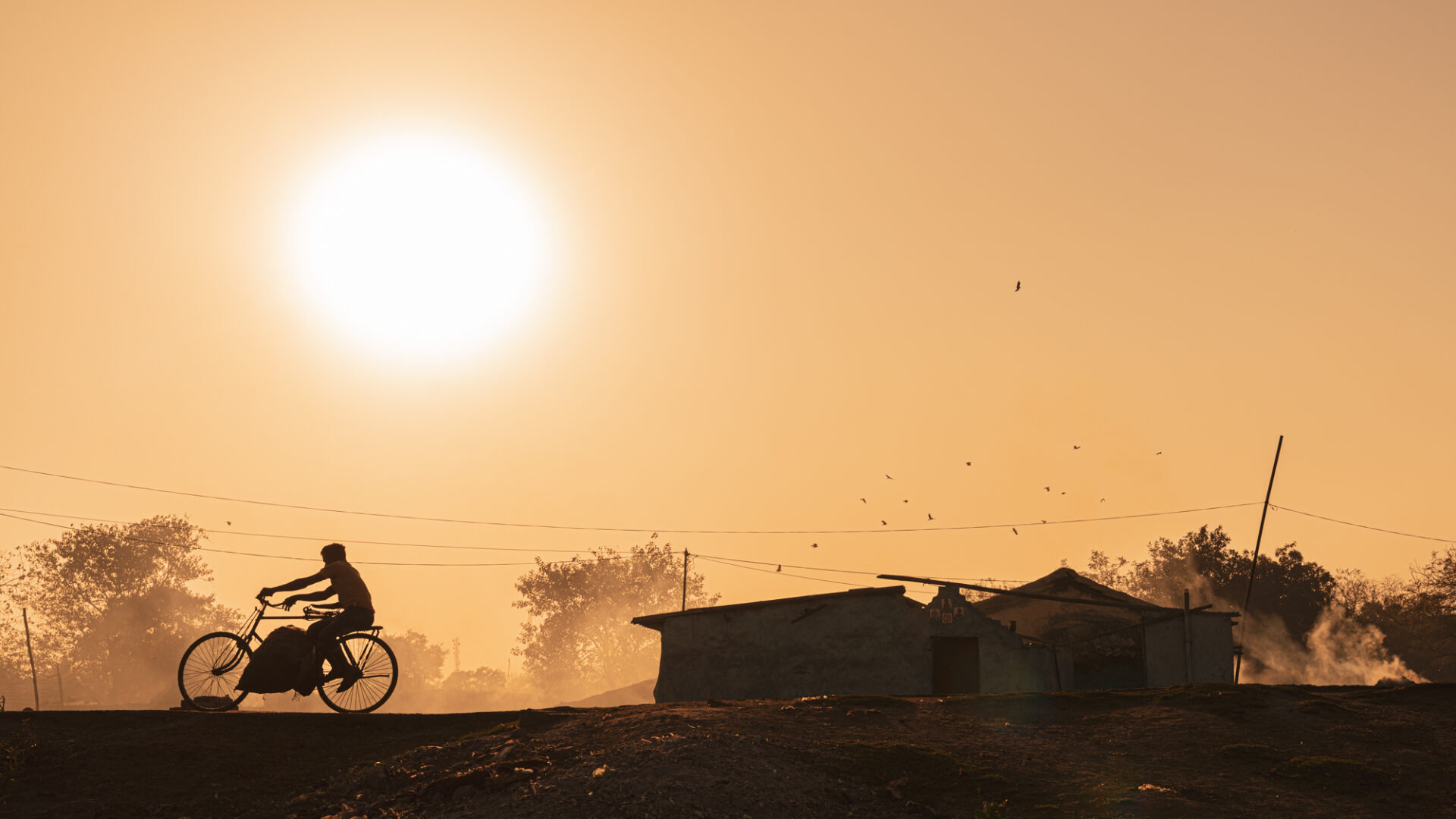
They load between 100 and 140 kilograms of coal onto a single bicycle.
For 100 kilograms, they earn only about 50 to 60 rupees.
Even the amount shown in this photo is worth no more than half a dollar.
Still, they push on uphill, downhill, and uphill again making their way home.
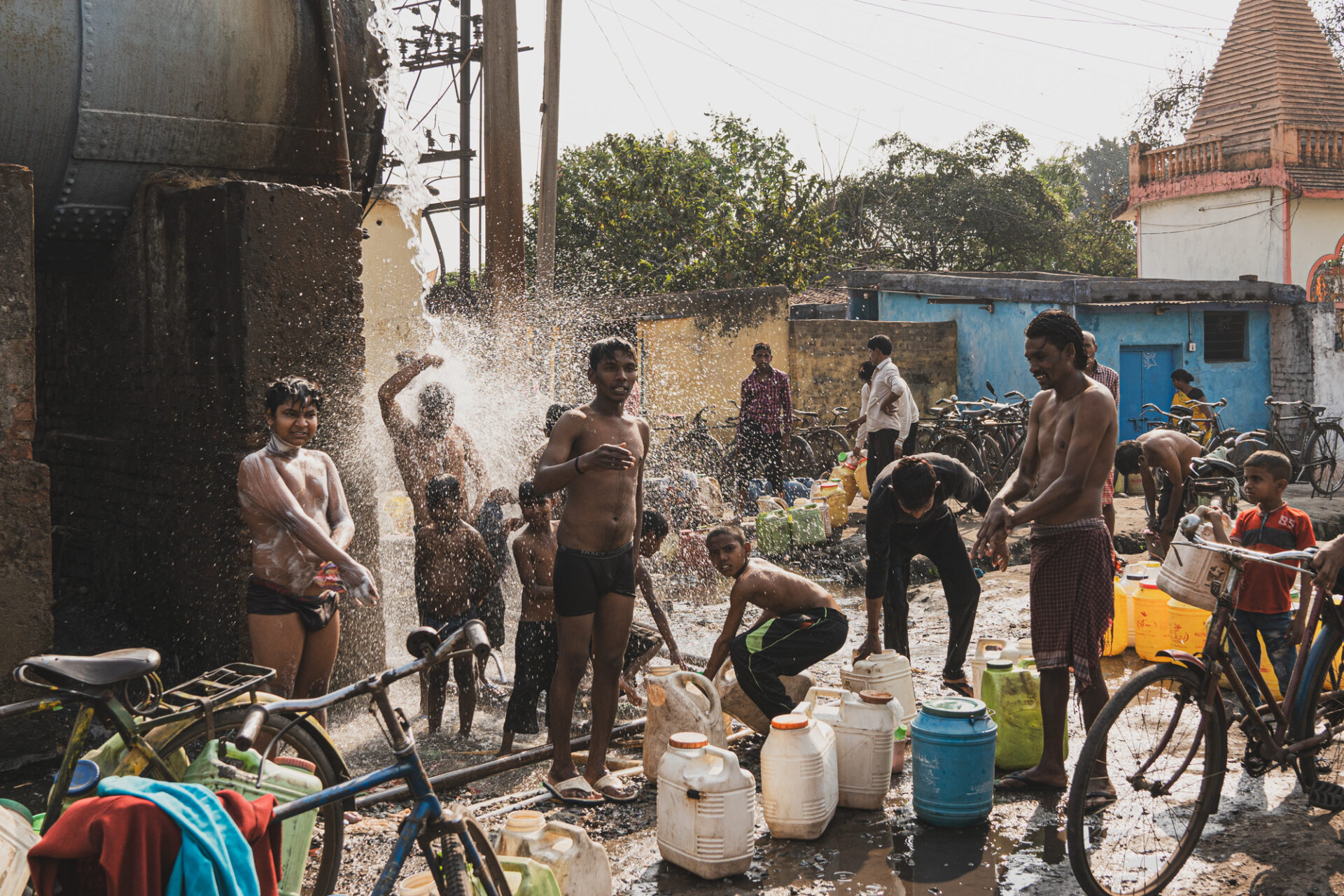
Washing away the dirt and the exhaustion.
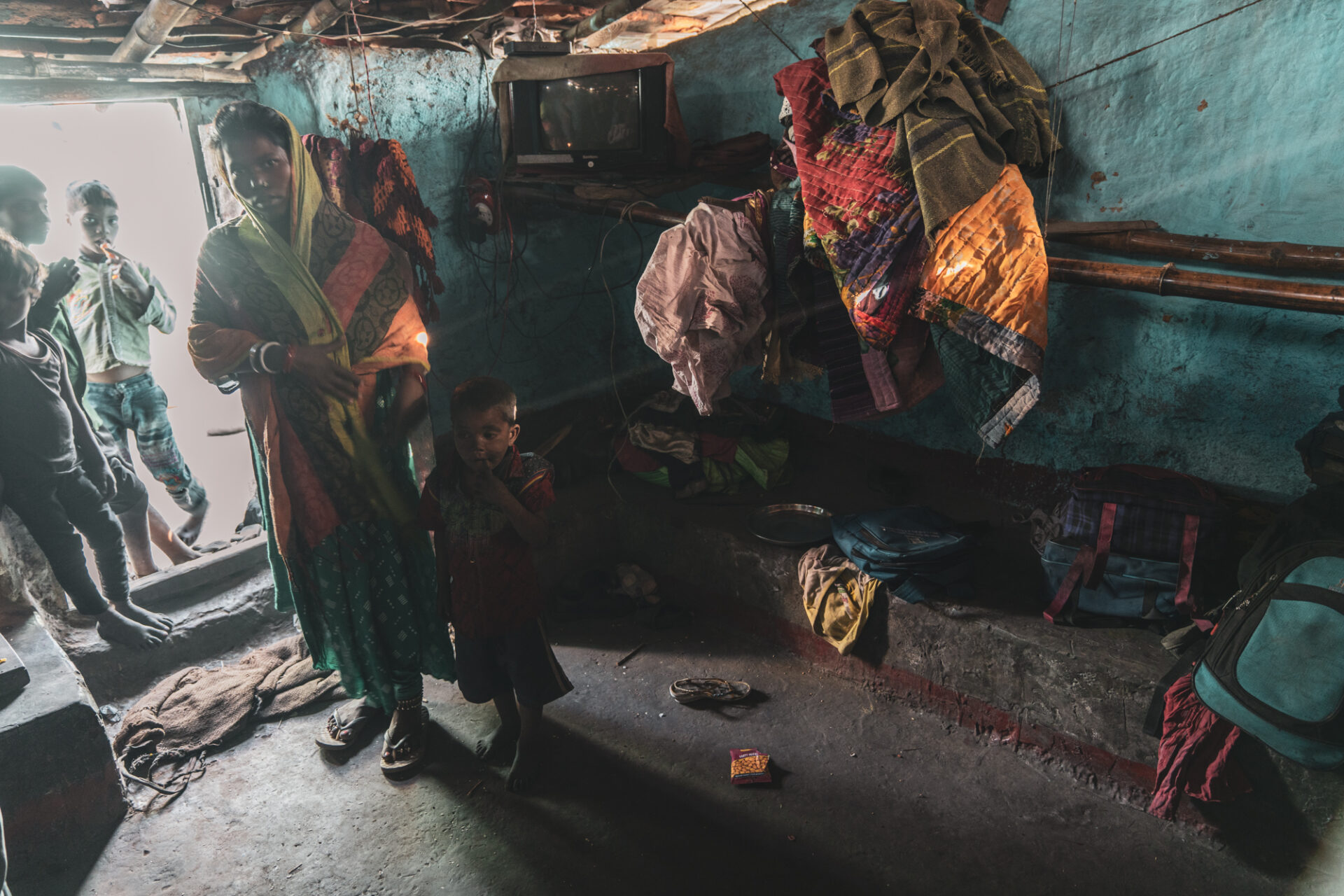
A family of six.
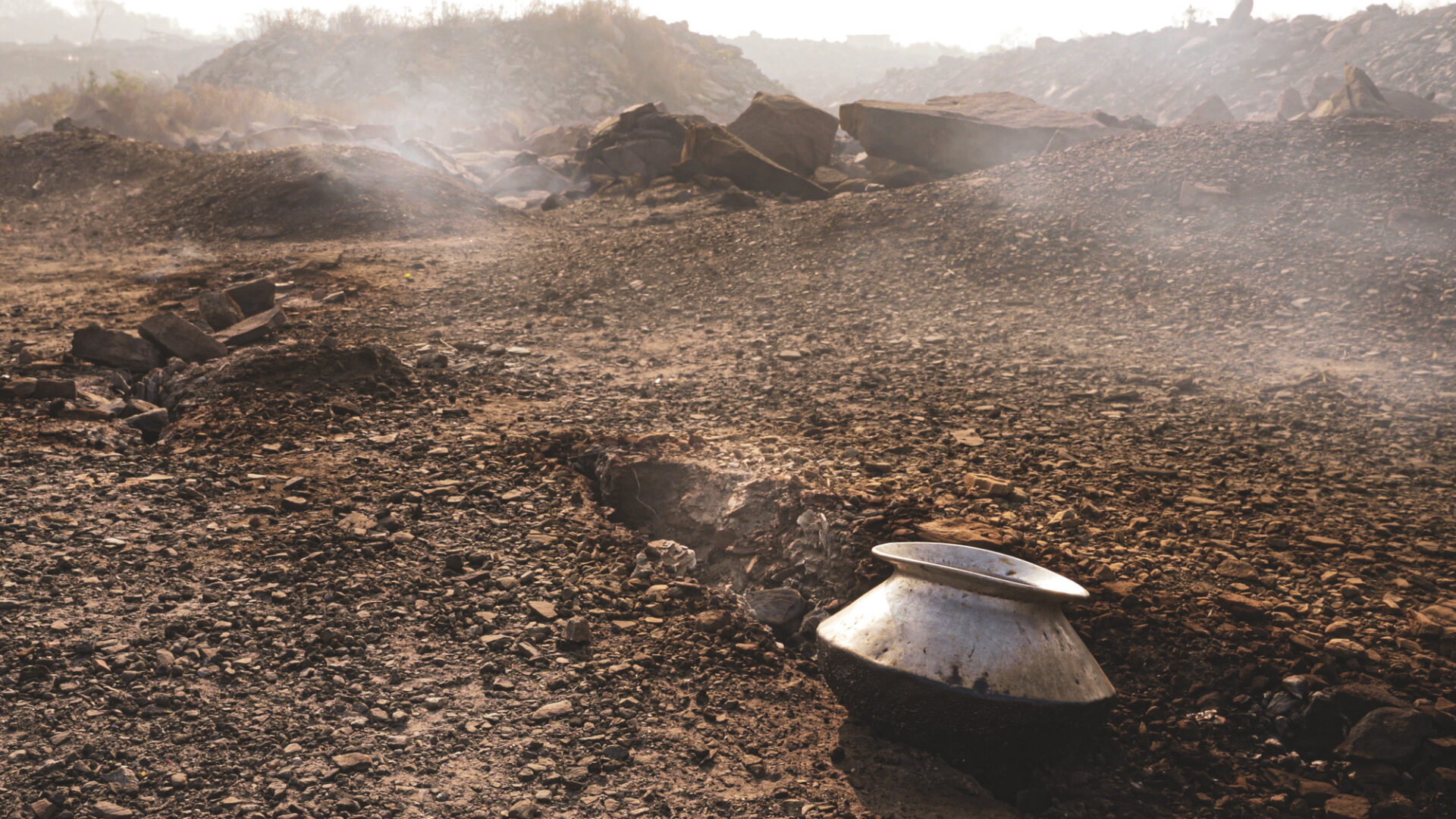
Although it cannot be seen in the photograph, flames shoot up from cracks in the ground, and the roar like gas burners turned on full blast can be heard from all around.
What could easily be described as a natural wonder or phenomenon has, in this place, become an everyday reality. The underground fires are so familiar that some residents even use their heat for cooking.
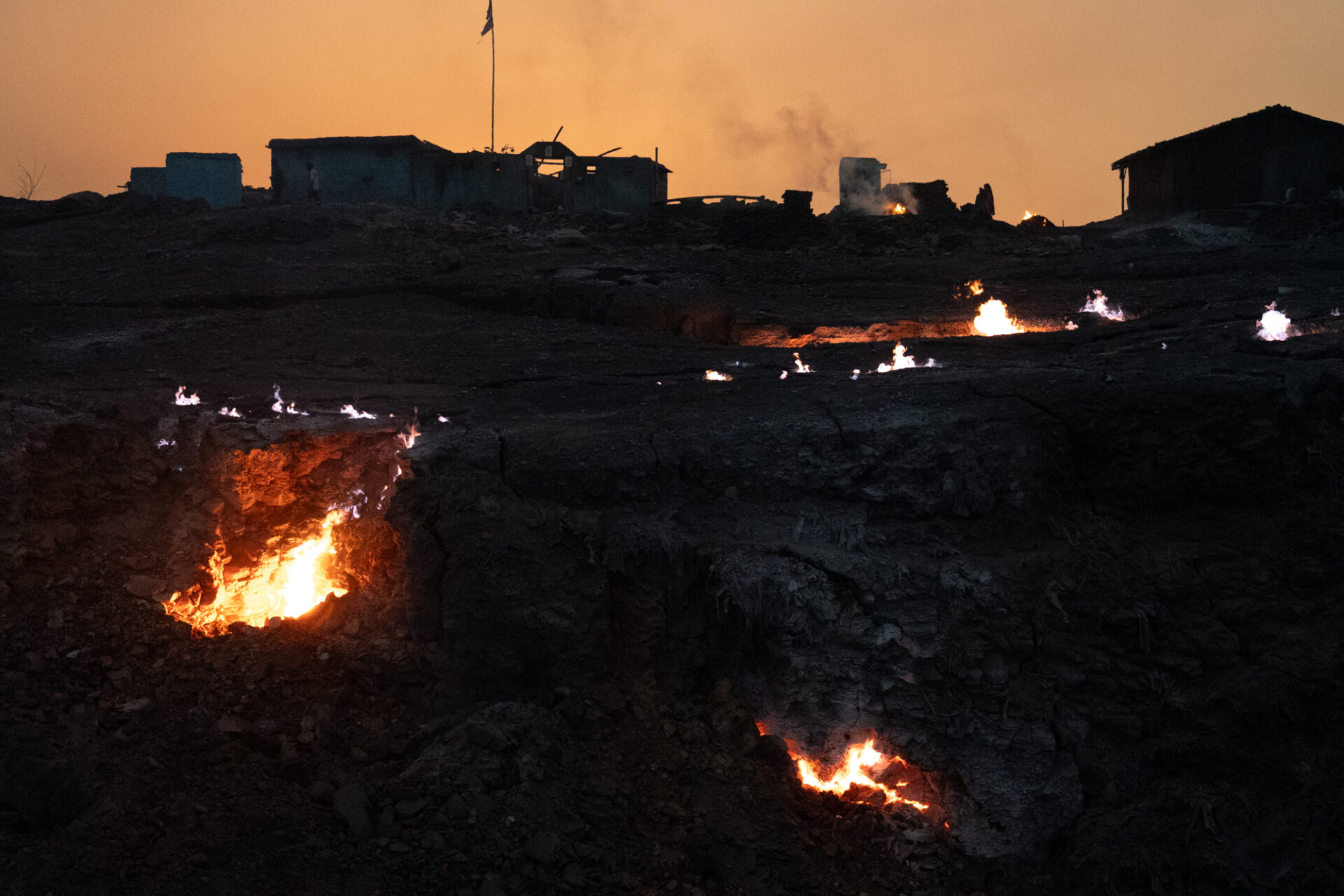
Across the village paths, fields, and coal mines, cracks open in the ground, sending flames, smoke, heat, and toxic gases into the air.
They say some of these fires have been burning for over a hundred years.
“A person even fell into one of those cracks and died,” a boy from the village told me.
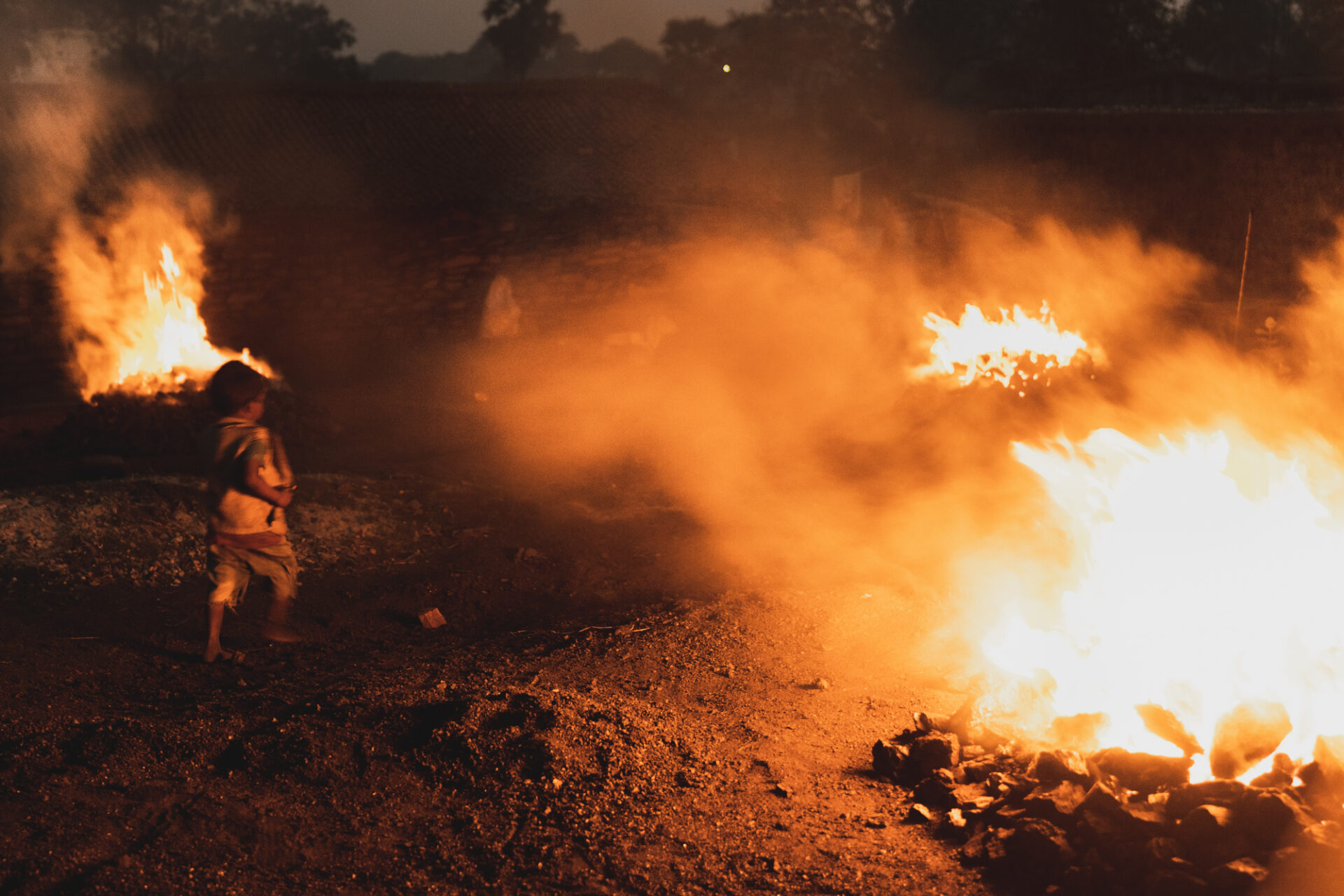
Coal is carbonized, impurities are removed, and the carbon content is concentrated to produce coke, which can be sold at a high price.
This process takes place throughout the village, creating an environment where underground and man made fires pose serious health risks to the residents yet it remains their means of livelihood.
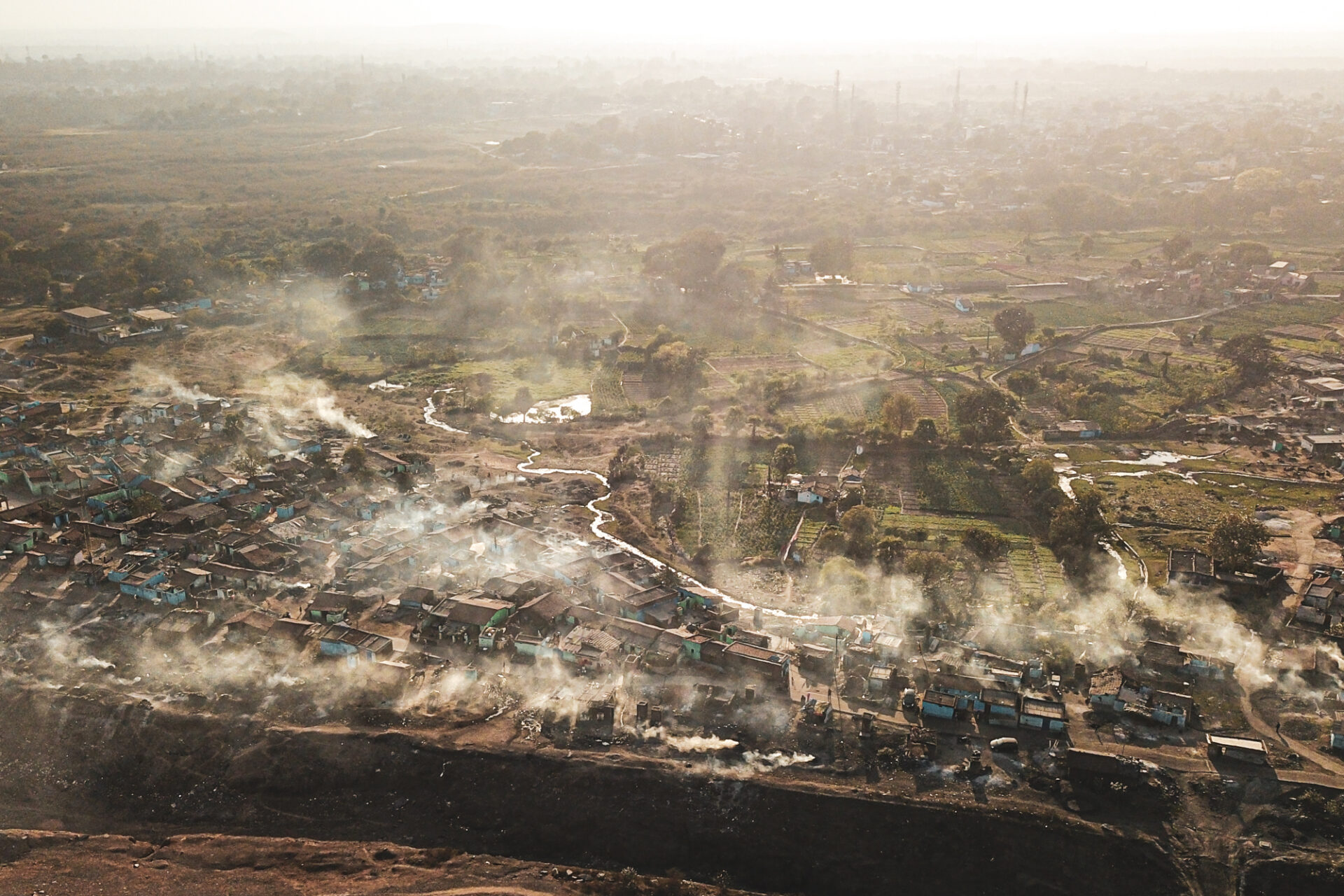
The setting sun lifts the smoke that drifts over the village.
It is estimated that more than seventy fires have been burning beneath the ground for decades, making it one of the largest coal fire zones in the world.
The fires in Jharia, in particular, have been burning for over a century, causing severe environmental destruction and posing serious health risks to nearby residents.
Toxic gases such as carbon monoxide, sulfur dioxide, and nitrogen oxides are released into the air, potentially leading to respiratory diseases, skin problems, headaches, and many other health issues.
Efforts to extinguish these fires have been underway for many years, but progress has been extremely slow due to technical and logistical challenges.
The Indian government has launched multiple projects aimed at controlling the fires and supporting the rehabilitation of affected communities, yet the complexity of the situation has made significant advancement difficult.
These coal fires remain a major concern, and addressing their impact on the environment and the health of local residents requires the cooperation of all stakeholders.
When I saw the Jharia coalfields with my own eyes, I was left speechless by the fires that have been burning underground for decades and by the harsh environment filled with smoke and toxic gases.
The impact on the health and daily lives of the people living there is profound, reminding me that environmental issues are never abstract—they are directly connected to people’s everyday reality.
Although efforts to extinguish the fires and support recovery continue, standing there in person made me truly understand the scale and complexity of these challenges.
I couldn’t help but hope that the children growing up there will one day be able to look toward a future filled with hope.
It also made me wonder what I myself was like as a child.
There are, of course, objections to child labor, but I believe that a family, at its core, is meant to support one another sharing hardships as well as joy, and weaving everyday life together.
Looking back, I was probably like a nestling waiting with its beak open for the food brought by its parents loud in voice, but doing little else.
Seeing the earnest, straightforward eyes of the children captured in my camera gives me a quiet sense of insight.
I wanted to make this experience something meaningful for myself.